The New Buyer Taking Over Small Business M&A in 2026

Rachel Horner
March 18, 2026 ⋅ 8 min read
There's a quiet assumption baked into most small business transactions: that the most sophisticated buyer is the best buyer. The PE-backed firm with a 40-page LOI. The funded searcher with an MBA, a model, and a mandate.
These are the buyers that command attention, and often, the ones that command the most skepticism from sellers who've been through a long, conditional, ultimately dead-deal process with them.
The data tells a different story.
After analyzing thousands of buyer interactions, one profile keeps rising to the top. Not because they have the most capital or the flashiest credentials, but because they show up prepared, stay engaged, and when they make a move, they mean it. That buyer is the self-funded individual. And if you're a seller, a lender, or anyone trying to understand where the market is actually heading, you should stop underestimating them.
In Brief
The buyer to watch in today's small business market is the self-funded individual. They're the largest segment, they close at higher rates than PE, and they have more on the line than any other buyer type. If you're selling, they might be your best offer.
Who Is Today's Buyer?
Let's start with where buyers are coming from. California, Texas, New York, and Florida account for the plurality of active buyers. But Colorado punches well above its weight at #5, a signal that the search for business ownership is spreading beyond the obvious metros.
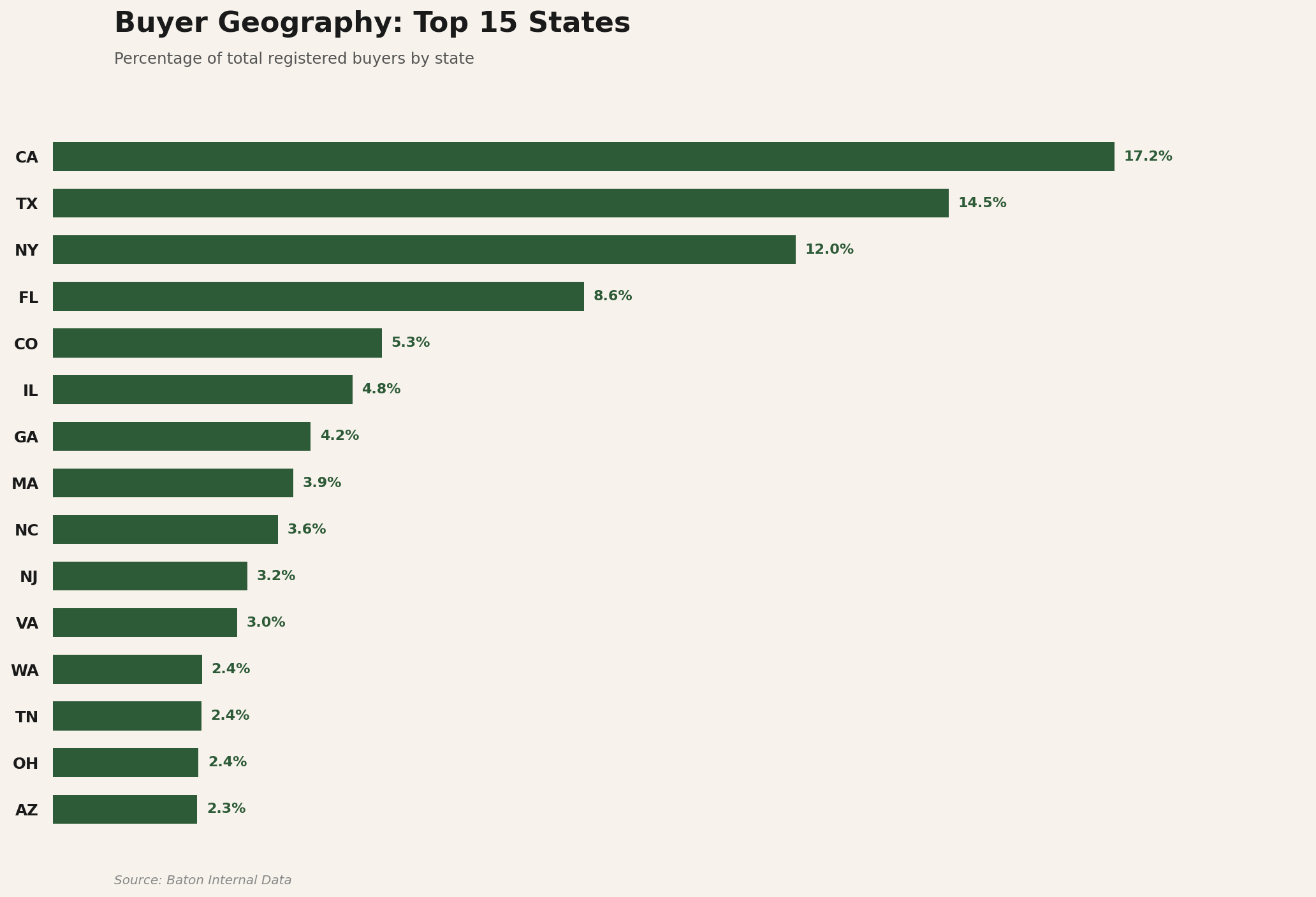
Nearly 50% of engaged buyers want to be full-time owner-operators. This is someone making a life decision, not a portfolio decision, and that distinction matters enormously when it comes to how they behave in a deal.
The Businesses They Want: Boring, Durable, and Built to Last
It's worth understanding what today’s buyers are actually chasing, because it says everything about their mindset.
Today's buyer is looking for durability. The two words that come up most when buyers describe what they want: recession-proof and AI-proof.
They've watched corporate layoffs, market volatility, and the rise of automation reshape entire industries, and they're making a calculated bet on businesses that hold their value no matter what the economy or technology throws at them.
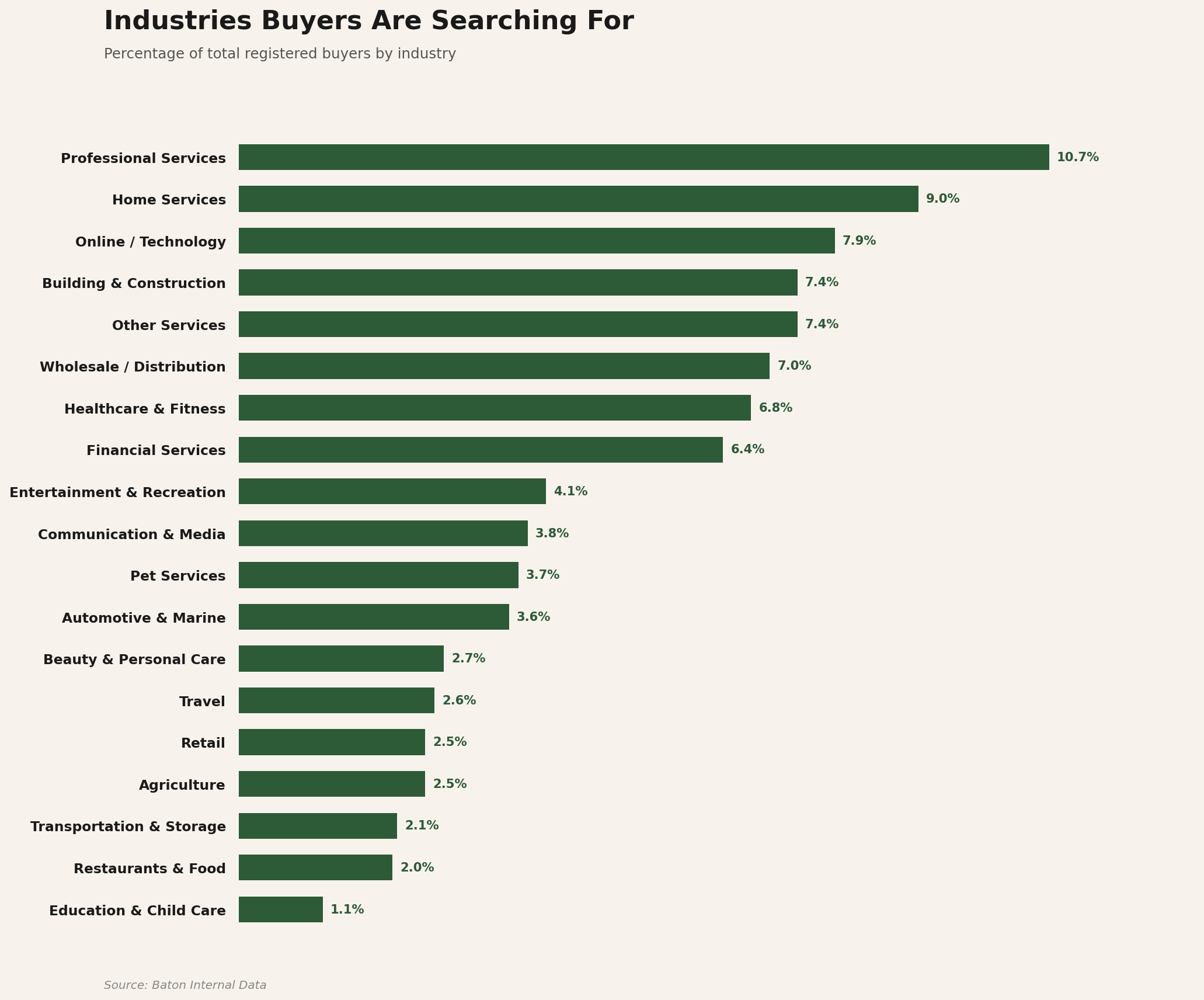
The pattern is clear: today's small business buyer wants something they can own for a decade, not flip in three years.
Professional Home Services
Professional Services and Home Services lead all other industries by a wide margin in buyer demand. The top seven categories each generate over 2,700 unique buyer searches.
Professional services fit that profile almost perfectly. Accounting, legal, consulting, staffing. These businesses run on relationships and expertise, not inventory or foot traffic. They're hard to automate, hard to disrupt, and generate the kind of recurring, sticky revenue that makes a buyer's SBA lender smile.
It's no surprise that by the end of 2025, more than half of the largest 30 U.S. accounting firms had sold a stake to private equity.
Manufacturing
Manufacturing is another industry worth watching, and its momentum is hard to ignore. After a cautious start to 2025, manufacturing M&A jumped in Q3, thanks to easing inflation and steadier financing that pulled buyers off the sidelines.
With renewed confidence and sustained demand in core industrial sectors, manufacturing M&A is set for a strong rebound, attracting both strategic buyers and private equity firms looking for long-term value. For the small business buyer, this translates into a rare window: well-run small manufacturers are in demand, financing is improving, and the tailwinds of domestic production policy are only strengthening.
Busting A Common Buyer Myth
Here's what the numbers actually show when you look at buyer profiles side by side.
Investor-Backed and PE buyers are the most active. They send the most introductions. They move early. They signal interest loudly. But their IOI-to-accepted-offer conversion rate is half the accepted rate of self-funded searchers.
On the other hand, self-funded buyers have one of the highest rates of serious market engagement. Individuals using SBA loans, personal capital, or a combination, have more on the line than any other profile in the market, and it shows. They're the largest segment in the market by a significant margin, with over 1,250 active buyers. And when they submit an offer, sellers accept it at a rate that would surprise most people in the room.
The all-cash buyer technically converts at the highest rate. But the story worth paying attention to is the self-funded buyer, working with SBA financing and personal savings, showing up with serious intent and the homework to back it up.
These are people leaving corporate careers. People who've spent months, sometimes years, researching industries, running financial models, talking to brokers, and getting their lending in order before they ever send an introduction. They have skin in the game in a way that an institutional buyer simply doesn't.
What Today’s Buyers Are Actually Asking Sellers
Here's perhaps the clearest window into today’s buyer's mindset: what they ask about.
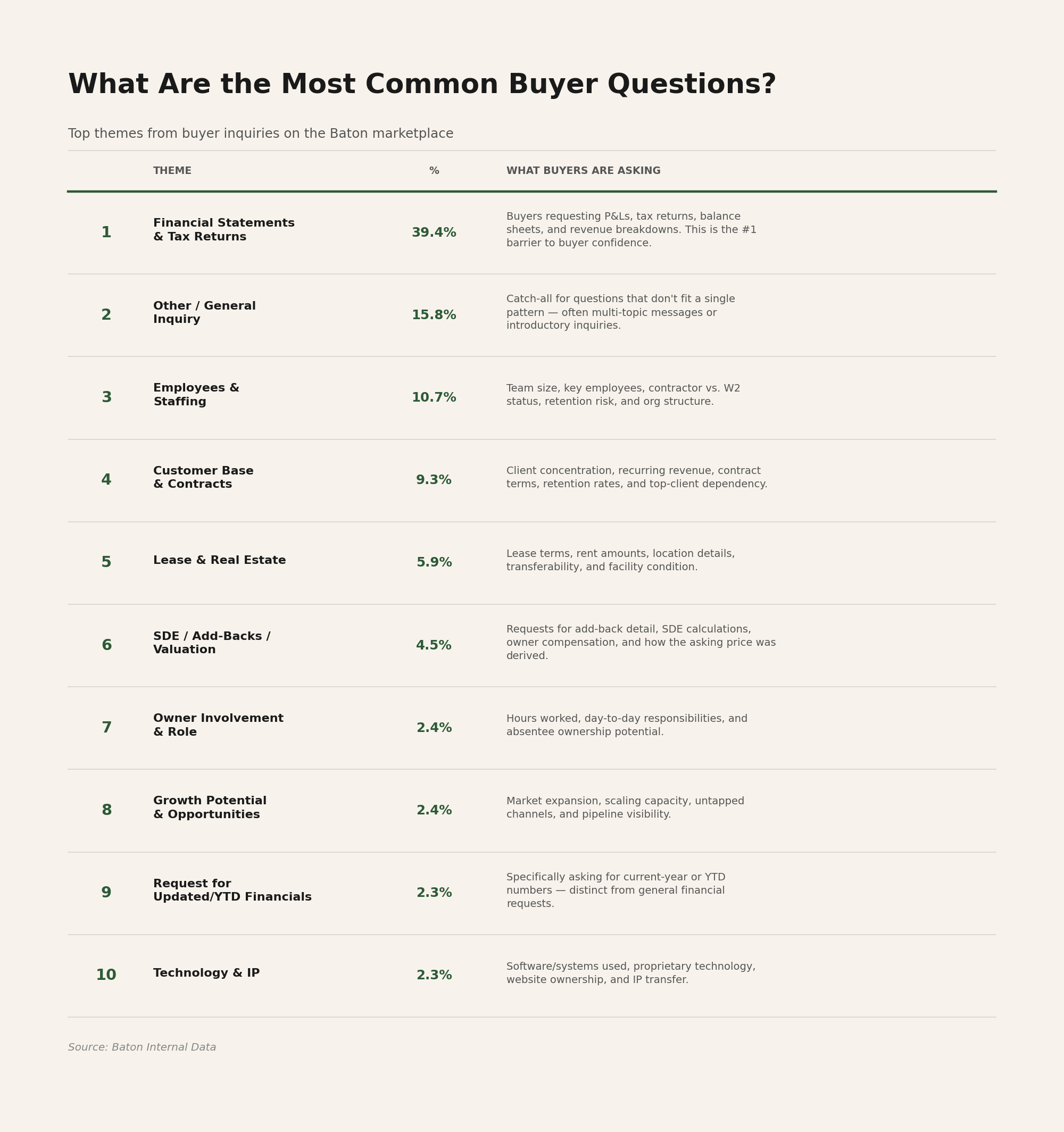
Nearly 40% of all buyer questions are about financials. P&Ls, tax returns, balance sheets, revenue breakdowns. Add in questions about SDE and add-backs, and requests for current-year or YTD numbers, and financial transparency accounts for nearly half of all buyer inquiries.
The next most common areas of concern include employees and staffing (10.7%), customer base and contracts (9.3%), and lease terms (5.9%).
This is not the behavior of a tire-kicker. This is someone doing real diligence. They want to understand the business before they bet their savings, and often their family's financial future, on it. When a self-funded buyer asks for your last three years of tax returns and a breakdown of owner add-backs, you can feel assured they’re serious.
Which means the sellers who are ready for that question, who have clean books, organized records, and a clear SDE story, are the ones who convert these buyers. The sellers who aren't are leaving their best offers on the table.
What This Means If You're Selling
The buyer in a polo shirt asking careful questions about your P&L is not a waste of your time. They might be your best offer.
Clean, current financials aren't just a box to check before going to market. They are the single clearest signal a buyer has that your business is organized, profitable, and worth a closer look. Nearly half of all buyer questions start there, and the deals that move fastest are almost always the ones where the seller had the answers ready.
If you're thinking about selling in the next one to three years, the groundwork you lay now, how you categorize expenses, how you document owner compensation, and how you tell the story of your SDE, will determine not just what offers you get, but who makes them.
What This Means If You're Buying
If you're a self-funded buyer, someone who's done the research, lined up your financing, and is ready to move, know this: your profile is one of the most compelling in the market right now.
You're not at a disadvantage because you're not PE-backed. You're at an advantage because you're serious, you're prepared, and sellers can tell the difference. The data backs you up. When buyers like you make offers, sellers say yes at rates that institutional money can't match.
The market is full of motivated sellers and motivated buyers who never find each other, or who find each other but can't close because one side wasn't ready. The self-funded buyer who shows up organized, asks the right questions, and moves with conviction is exactly what the market needs more of.
Don't let anyone tell you otherwise.
Final Thoughts
Every deal starts with one question: what is this business actually worth? For sellers, knowing that number, built on real financials, normalized to SDE, and benchmarked against comparable transactions, is what puts you in a position to attract serious buyers and close on your terms.
For buyers, the inventory, and opportunity, is there. Baton's listings are vetted, financeable businesses with real numbers behind them. If you've done the work to get here, the next step is finding the right business to back it up.
Frequently Asked Questions
Who is buying small businesses right now? The market includes PE firms, first-time buyers, and everything in between. But the segment worth watching is the self-funded individual. According to Baton's data, they're among the most active buyers in the market, and they close at rates that most institutional buyers can't match.
Are PE buyers the best buyers for small businesses? It depends on your goals. PE-backed buyers are active, well-capitalized, and can move quickly, but for sellers who prioritize certainty of close, other buyer profiles, like self-funded buyers, can be just as compelling,
What do buyers ask about most? Financials, overwhelmingly. Nearly 40% of all buyer questions are about P&Ls, tax returns, and revenue breakdowns. Sellers with clean books and a clear SDE story convert the best buyers fastest.
What makes a business attractive to today's buyers? Predictable revenue, clean financials, and a business that doesn't depend entirely on the owner. Buyers are looking for durability: something they can own for a decade, not flip in three years.
Do I need to be PE-backed to compete as a buyer? No. Preparation and genuine intent often matter more than who's backing you.