Selling Your Business to an Employee: What to Know Before You Decide

Rachel Horner
March 16, 2026 ⋅ 6 min read
In our Ask the Experts series, we tackle the most pressing questions from buy and sell-side professionals.
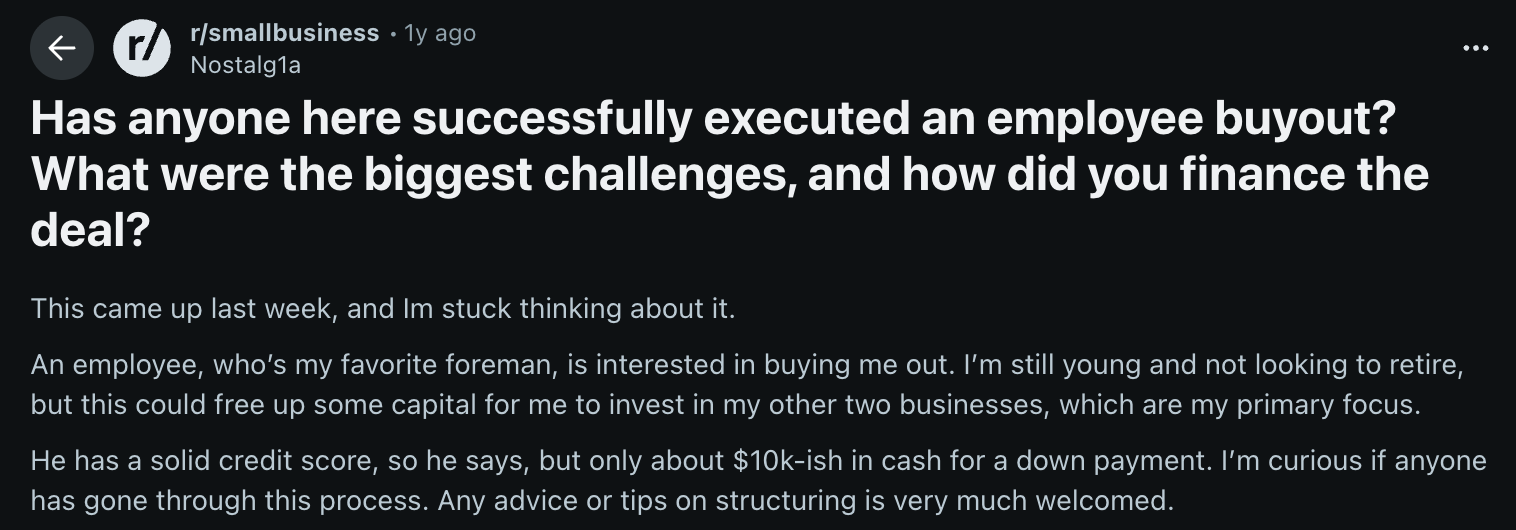
One topic that keeps coming up from potential sellers, most recently during our webinar with ACCA, is the employee buyout and whether it’s the right exit path.
The opportunity is real. As family succession becomes less common, more owners are open to alternatives. In 2022 alone, an estimated 510,000 small and mid-sized businesses exited the market. Of those, 92% closed, 5% were sold, and just 3% transferred to new owners. That leaves a significant gap of owners who could benefit from a structured exit strategy.
Below, we break down the factors to consider in an employee buyout and how to best finance the deal.
Is an Employee Buyout Right for You?
While employee buyouts offer real advantages, they aren't without their complexities.
For one, without a few years to clean up the financials, the books can look unattractive to lenders. Sellers operating on SDE need adequate runway to present a bankable picture.
Start by pulling together the documents both your lender and buyer will need:
Financial records of at least three years, including tax returns, balance sheets, income statements, and cash flow reports.
Clear documentation of internal processes, roles, and compliance.
Employee agreements detailing responsibilities and structure.
And finally, all vendor contracts, leases, and customer agreements.
It’s also important to consider experience. Key employees are often strong operators, but unprepared for the broader responsibilities of ownership. A transitional period helps bridge this gap. For instance, the buyer can function as a Director before the sale closes, giving them time to grow into the full role.
Note that key employees often rise through the ranks without exposure to business valuation. Large purchase prices can be a stumbling block. For a business generating $300K in cash flow, a $1M sale price is reasonable, but without context, that number can feel overwhelming. Educating buyers on how loan repayment works through business cash flow is often a critical part of getting the deal done.
Confidentiality is one of the biggest risks in any sale. Finding the right time to tell team members is often one of the biggest concerns a seller has, and for good reason. Discussing a potential sale internally before a deal is finalized can raise sensitive questions among other employees and customers before you're ready to answer them.
How to Best Finance an Employee Buyout
There is no one-size-fits-all approach to financing an employee buyout. The right structure depends on the business, the buyer, and how involved the seller wants to remain.
Vendor financing is a flexible option particularly suited to smaller or asset-light businesses. Here, the seller finances the deal with repayment tied to dividends.
Seller financing can work well when the buyer is a core hire and trust has been established. Here, the buyer makes a down payment and the seller finances the remainder under agreed-upon terms. One variation is a gradual buyout, where the employee buys in over time, reinvesting their distributions back to the seller each year in exchange for additional ownership.
Sellers should go in with eyes open though, as payments can be steep relative to what a buyer with limited savings can comfortably absorb.
SBA loans are a common way for buyers to finance an acquisition. If the business has physical assets like equipment or vehicles, a buyer may be able to secure a bank loan using those as collateral. For businesses where the primary value is in the customer list or employees, the buyer may need to offer personal collateral such as a home or vehicle.
If the buyer is clearly the right person to run the business, a traditional lump-sum sale isn't the only option. Sellers can structure a deal around ongoing profit sharing instead. For example, taking 75% of profits until a target payout is reached, then a smaller percentage in perpetuity. Done right, this can function as a reliable retirement income stream.
The tradeoff here is risk. If the business underperforms, so does the seller's payout. For sellers who want a clean exit and a guaranteed number, selling to a better-capitalized buyer like a competitor may be the safer path.
Note that if the business has outstanding debt, leased equipment, or real estate leases that the seller has personally guaranteed, those obligations don't automatically transfer cleanly to the buyer. The seller may remain on the hook legally until those agreements are renegotiated or paid off. It's an important piece of due diligence that can complicate or delay a deal if not addressed early.
Final Thoughts: Consider Your Options with Baton
Whether you're exploring an employee buyout, entertaining outside offers, or simply trying to understand what your hard work is worth, going in informed makes all the difference.
Knowing your fair market value is the foundation of any successful exit. Without it, you risk leaving money on the table or agreeing to terms that don't reflect what you've truly built.
Get started with a free valuation from Baton so you can move forward with confidence, clarity, and the full picture of what your business is worth.
FAQ
What is an employee buyout? An employee buyout is when a business owner sells their company to one or more existing employees rather than an outside buyer. It's a common alternative to family succession or a traditional sale.
What financing options are available for an employee buyout? The most common options include seller financing, vendor financing, SBA loans, and profit-sharing arrangements. The right structure depends on the business, the buyer's financial situation, and how involved the seller wants to remain after the sale.
What are the biggest risks of selling to an employee? The main risks include confidentiality concerns, buyers who are strong operators but unprepared for ownership, and financing structures that may strain a buyer with limited savings. Outstanding debt or personally guaranteed leases can also complicate the deal.
How do I know if my business is ready to sell? At minimum, you'll want at least three years of clean financial records, documented internal processes, and clear employee and vendor agreements. Sellers operating on SDE should also allow enough runway to present an attractive picture to lenders.
How do I know what my business is worth? Getting a professional valuation is the best place to start. Baton offers a free valuation to help you understand your fair market value before you make any decisions.